How Long Do Corrective Braces Take?
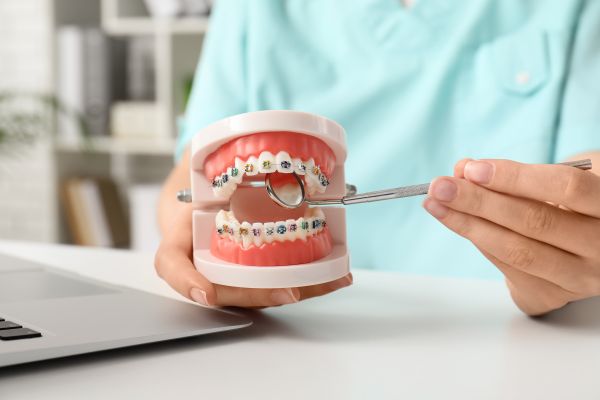
Corrective braces gradually move teeth into healthier positions, but treatment does not follow the same timeline for everyone. Many patients wear braces for about one to two years, although simpler cases may take less time and complex bite problems can take longer. Our orthodontist can provide a more useful estimate after examining the teeth and bite.
How long do corrective braces usually take?
The American Association of Orthodontists (AAO) places typical corrective braces treatment timelines at roughly 12 to 24 months. That range offers a starting point, not a guaranteed removal date. Someone with minor spacing may finish sooner than a patient who needs substantial bite correction. During the initial consultation, the orthodontist examines the teeth, reviews imaging, and explains the movements needed to reach the treatment goals. Follow-up visits help refine that initial estimate.
The complexity of the bite makes a difference
Straightening a few crowded teeth is different from correcting a deep bite, crossbite, or major spacing problem. Some teeth need to move farther or in several directions, which requires additional time. The orthodontist may also recommend elastics or other appliances to help correct how the upper and lower teeth meet. While corrective braces move teeth gradually so the surrounding bone and tissues can adapt, the specifics of the treatment plan reflect the extent of correction rather than appearance alone.
Age and oral health affect the plan
Teenagers and adults can both benefit from orthodontic treatment. Growth may influence the timing of certain bite corrections, but age alone cannot predict exactly how long braces will stay on. Healthy teeth and gums also matter before and during treatment. If a patient develops cavities or gum inflammation, the orthodontist may need to coordinate care with a general dentist before continuing treatment. Note that existing dental work may influence the approach and timing.
Consistent care helps avoid delays
Consistent appointments allow the orthodontist to adjust wires, check tooth movement, and confirm that treatment remains on track. Missing visits, breaking brackets, or not wearing prescribed elastics can extend the timeline. Patients can help by following food restrictions, brushing thoroughly around brackets, and cleaning between teeth every day. Additionally, if a wire or bracket breaks, contacting the orthodontic office promptly can prevent an avoidable delay. These habits support progress, although they cannot guarantee an earlier finish. Of course, regular dental checkups also protect teeth during orthodontic care.
What happens when the braces come off?
The end of active orthodontic treatment does not mean teeth will stay in place without support. After removing corrective braces, the orthodontist provides a retainer plan to help maintain the new positions. Most patients start with around-the-clock wear, then taper down to wearing retainers only while asleep.
That said, retainer instructions vary. Ongoing wear may be necessary for the long term. Follow-up appointments help the orthodontist monitor stability after debanding.
Schedule a consultation
The time needed for corrective braces depends on the bite, treatment goals, and how the teeth respond. Our orthodontist can explain the expected timeline and what patients can do to keep treatment moving forward. Call our office and schedule a consultation to review treatment options.
Request an appointment here: https://www.smilesbyshell.com or call Dr. Gregory K Shell at (828) 386-9811 for an appointment in our Granite Falls office.
Check out what others are saying about our services on Yelp: Corrective Braces in Granite Falls, NC.
Recent Posts
Searching for an orthodontist near me can lead to a seamless transition to a healthier, more functional, and well-aligned smile. Modern orthodontic care offers much more than traditional metal brackets, so a localized search helps patients discover the latest in digital imaging and discreet treatment options. The best choice is to select a practice that…
Children's braces often involve metal brackets and wires because this traditional orthodontic option has guided many growing smiles with reliable results. An orthodontist can use metal braces to correct crowding, spacing, bite problems, and tooth position in a steady, predictable way. While newer options exist, metal children's braces remain a popular choice among parents and…
Traditional metal braces remain a dependable choice for individuals seeking lasting orthodontic results. Known for their strength and precision, traditional metal braces deliver consistent tooth movement and remain a go-to option for both teens and adults. For those considering orthodontic treatment, it helps to understand what makes this system so effective and why it remains…
Clear aligners provide a discreet, removable way to straighten teeth, but early habits often determine how smoothly treatment progresses. The first few weeks typically involve learning to wear the aligners consistently, adapting to new routines, and keeping them clean. With the right plan, most beginners settle into aligner life quickly and see steady improvements. These…